Saturday, January 24, 2026

Reckoner


“Wherever you go, there you are.” This insight from Jon Kabat-Zin is shorthand for the notion that you won’t often outrun your internal situation just by changing your external circumstances. Which is sometimes a frustrating thought for those of us that work so hard to change our external circumstances (because, of course, then we’ll be happy). 


It’s been almost three years now since I wrote “Commencement” (more than six since “Five Years Later”). A lot has changed in the last few years, including the fact that I’m newly married now and wonderfully (wonderfully) happy there. And also, it turns out there is (much) more to figure out in life beyond finding the right partner and working to improve a fulfilling and stretching and loving romantic relationship (though before Danielle, I found that hard to imagine because that goal consumed so much of my thought and energy).


But it turns out that at nearly 48 years old, I’m still trying to figure things out. I kinda thought I’d have it all together by the time I got here, but what can you do?  


I started writing this piece several months ago in what was intended mostly as an appreciation post for the Radiohead song “Reckoner.” But as I walked with things long enough, more came to the surface, and I recognized I was trying to work through (or at least articulate) what’s been a significant, and significantly difficult, part of my internal experience for as long as I can remember: the fact that I wake up most mornings weighed down by worry and fear (Danielle has affectionately labeled this my “marine layer”). It’s an aspect of my personality I’m not particularly fond of.


I will leave some mystery to where this all lands, and I’ve also got a pressing question for you as we get to the end of this post. But first, I need to provide some important context, which means starting with one more close look at the play Our Town. Forgive me, but it’s necessary.


[Spoiler alert if you haven’t read or seen the 1935 play—but also, your ignorance feels like it’s deliberate at this point]


Revisiting Our Town


As you may be well aware, Our Town takes place in the early 1900s in the the fictional western Massachusetts town of Grover’s Corners. Aside from the Stage Manager, the central figures in the play are two families—the Gibbs and the Webbs. There is little remarkable in the First Act as Thornton Wilder introduces us to the small town and the characters and the seeming ordinariness of life there. Emily Webb and George Gibbs are high school teenagers, and we get hints of their budding romance. 


The Second Act advances the story three years and shows us scenes with both families on the morning that Emily Webb and George Gibbs (now all of 19 years old) are to marry. We also get a glimpse backward to the day the two began dating. 


In the Third Act (nine years after the wedding), we learn that Emily has just died in childbirth. We are placed in the Grover’s Corners cemetery for the aftermath as Emily is buried next to her mother-in-law (who had died 2-3 years earlier). We learn indirectly that Mrs. Gibbs apparently never took that trip to Paris she’d schemed about years before. Now Mrs. Gibbs, with the other dead in the town, sits mostly still and quiet, waiting for the “next thing” (brilliantly, we’re never told what that is). 


Emily enters the scene as her body is brought in for burial. Her spirit, though, is still full of life. She is watching her funeral (that takes place in the background), and she is trying to take in her death and make sense of what’s happening. Emily seems nervously talkative, and begins catching up her mother-in-law on all that’s happened in the last few years. Mrs. Gibbs is polite but hardly interested. 


Emily then pauses and asks her mother-in-law, “Live people don’t understand, do they?” 


“No, dear—not very much.” 


As Mr. Gibbs comes to lay flowers on Mrs. Gibbs grave, Emily further observes “Oh, Mother Gibbs, I never realized before how troubled and how…how in the dark live persons are. Look at him [Mr. Gibbs—her father-in-law]. I loved him so. From morning till night, that’s all they are—troubled.”


Not long after, Emily realizes that, in death, she now has the power to go back and revisit any moment of her life she chooses. It seems wonderful! And her first inclination is that she wants to revisit all her days over again…why not? 


The other dead, mostly Mrs. Gibbs, warn her against this, though. It will be too painful to go back. The Stage Manager explains that it’s because Emily would not only relive those moments, but she watches herself reliving them. And she watches knowing now what is to come. 


But if Emily insists on it, she should only visit “the least important day in [her] life”—not anything she would deem too special. An ordinary day, Mrs. Gibbs advises, would prove important enough.


Emily determines she needs to know for herself and decides to revisit her twelfth birthday. 


At first, as Emily returns to the early morning, she is wide-eyed and filled with wonder, taking in the town, her house, and just how young her mother looks—Emily didn’t think her mother was ever thatyoung.


But Emily’s sense of wonder quickly becomes unbearable. Her mother is insisting Emily get ready for school, and her parents are talking about the weather, even as it’s Emily’s birthday. Emily soon finds she can’t adequately take everything in: she can’t look at everything hard enough. 


Amid the bustle of breakfast and birthday gifts and rushing the kids off to school, Emily desperately needs her mother to look at her, but Emily can’t sufficiently get her attention:


“Oh, Mama, just look at me one minute as though you really saw me. Mama, fourteen years have gone by. I’m dead. You’re a grandmother, Mama. I married George Gibbs, Mama. Wally’s [Emily’s brother] dead, too. Mama, his appendix burst on a camping trip to North Conway. We felt just terrible about—don’t you remember? But, just for a moment now we’re all together. Mama, just for a moment we’re happy. Let’s look at one another.”


Emily is visiting the past, though, and can’t snap her mother out of talking about the various birthday gifts coming Emily’s way. 


And it turns out this is too much. Emily stops it all, calling out to the Stage Manager, “I can’t. I can’t go on. It goes so fast. We don’t have time to look at one other.”


She continues “I didn’t realize. So all that was going on and we never noticed.”


Before the Stage Manager takes Emily back to the cemetery, Emily takes in one last look:


“Good-by, Good-by, world. Good-by, Grover’s Corners…Mama and Papa. Good-by to clocks ticking…and Mama’s sunflowers. And food and coffee. And new-ironed dresses and hot baths…and sleeping and waking up. Oh, earth, you’re too wonderful for anybody to realize you.”


It’s then Emily asks the Stage Manager the penetrating question, “Do any human beings ever realize life while they live it?—every, every minute?”


“No,” the Stage Manager responds flatly. But after a pause, he offers this qualification: “The saints and poets, maybe—they do some.”


As Emily is brought back to the cemetery, Mrs. Gibbs asks her, “Were you happy?”


Emily offers the devastating observation in reply, “No…I should have listened to you. That’s all human beings are! Just blind people.”


By that point, it’s late, and the dead turn their attention to night sky and stars coming out. As the play nears its close, George Gibbs (Emily’s husband) approaches Emily’s grave, sinking to his knees and falling prostrate at Emily’s feet—obviously deep in anguish. Emily watches her husband uncomfortably and asks (again) the final question to her mother-in-law:


“They don’t understand, do they?”


“No, dear. They don’t understand.”


"Too Wonderful for Anybody to Realize You"


I first read Our Town in high school, and it has come to mean an awful lot over the years. For me, there is usually a hopeful ache in its message—a message that still sometimes reduces me to tears: even at its most mundane and seemingly trivial, life is precious. And if we stopped to notice, to really notice, we'd recognize how it all “goes so fast" and how impossible it is to really hold on to anything. If we have the presence of mind, we will "recognize life while we live it" and more regularly be filled with gratitude and awe. 


When that happens, it’s such a beautiful thing. For flashes of time, the ordinary becomes transcendent, and I’m left savoring the warmth of a hot shower or the satisfaction of yet another bowl of oatmeal. Or doing the dishes. Or mowing the the lawn, or any number of ordinary, wonderful things. It’s the kind of feeling that has surfaced every so often over the years, and I’ve tried hard lately to cultivate a more frequent intentional recognition of life as I live it. 


And even these days, amid all the world’s chaos, it usually doesn’t take much effort to sense that there is *so* much to be grateful for in my life, so much about even the most mundane aspects of of it that I’d miss at the prospect of leaving.  


And yet, there are (many) times this does not feel true for me. I feel a little sheepish admitting this but there are times when the poignant message of Our Town doesn’t quite reach me—even as its top of  mind. For whatever reason, there are times when I cannot find transcendence above the fretting and anxiousness and worries—the troubles—of the moment. The subjects and details of those troubles probably aren’t so important (and honestly, I don’t dare compare my troubles with yours), but they can be stubbornly persistent. And my reality is that I have lots of early mornings that feel so difficult to get moving. Or put more plainly, there are many days I wake up confronted by life’s demands, and I am afraid that I will not be able to meet them. I am afraid the day might just swallow me whole, and I carry that fear as I get moving. Which means, far more often than I want to admit, the troubles of the day cloud out any sense of wonder or transcendence, and I’m just looking for the strength to get moving. 


So often for me, the idea of “recogniz[ing] life while [I] live it” doesn’t do much to alleviate the pit in my stomach as I search for the strength to face the challenges ahead.


And in those moments, the message of Our Town can feel frustratingly foreign and out of reach. In fact, it can sometimes feel like more of an indictment than an inspiration. 


[And yes, I understand that read literally, Wilder’s words are ones of lament: only “saints and poets” recognize life while they live, and then only “sometimes.” But if Wilder did not mean for the play be hopeful, then it is almost universally misunderstood. I more see statements like those as adding fuel to the fire, inviting us toward appreciation, much in the same way that C.S. Lewis used The Screwtape Letters—letters from a devil—to write movingly about god and faith and charity in incredibly tender ways.] 


Which is to say, sometimes the reverenced message of Our Town can be exactly what I need. But other times, it feels frustratingly inadequate. In fact, it can feel like the opposite of helpful and hopeful. 


“Reckoner”


Now, let’s juxtapose that messaging and experience against a work that’s frequently met me in that difficult headspace: the song "Reckoner" from Radiohead's 2007 album In Rainbows


While there may not be an official interpretation of the song, let me lead here with the fact that I interpret the word "reckoner" in this song to mean "death."  


Take a listen if you haven't heard it in a while. It'll make my attempt to write about the song feel a little less awkward.


The song leads with drums, a tambourine, and apparently a lemon, setting a gentle but determined rhythm. 


Soon after, we get a lightly introspective and intoxicating finger picking of an electric guitar that, together with the percussion, sets an atmosphere that feels like clear eyed, beautiful melancholy.


It’s a full 47 seconds into the song before Thom Yorke’s falsetto vocals arrive on an off beat, with a drawn out singing of the word “Reckoner” [death].


In a few minimalist lines, the song describes the complications of mortality: our inability to hold onto things, the striving for happiness even so, and the difficulties and heaviness that often cloud our vision:


Reckoner


You can’t take it with ya

Dancing for your pleasure


You are not to blame for

Bittersweet distractors


Dare not speak its name

Dedicated to all hu-

All human beings


[Interlude]


Because we separate

Like ripples on a blank shore 


Because we separate (in rainbows)

Like ripples on a blank shore (rainbows)


Oh, reckoner

Take me with ya


Dedicated to all you

All human beings


****


It's this early line that first got me: You are not to blame for bittersweet distractors.


It’s probably not always true that we aren’t to blame, but it at least feels true sometimes. And the singing of that line here puts me in communion with the rest of humanity in the struggle (dedicated to all human beings) without necessarily being swallowed by it. Put another way, it feels as though “Reckoner” looks at the difficulties of being human and comes along side me to sit a while in that difficulty (something I never really get the sense of from Our Town, which rather seeks to inspire me out of our difficulty). 


Yes, we humans may largely be “troubled” and “blind people,” but it’s a frustrating oversimplification to say we are “just” that. Some of us really work to develop practices that help us see things more clearly more often, building in space for reflection and gratitude. Sometimes even awe.


I know I’m not alone in that.


But in my experience much of the blindness Wilder identifies (if not decries) arises out of the fact that life is hard. It’s not just that we go through challenges and difficulties, but sometimes we experience horrible things. Sometimes we do horrible things.


And yes, though so many days “go[] so fast” that we can’t adequately appreciate them in the moment, I wonder how many of us have days we not only wouldn’t ever want to relive, but that we (justifiably) wish we could banish from our memory forever. 


Even when it comes to just the plain old fears and worry I often confront—worry about the safety and survival and comfort of those I care about, worry about my continued ability to provide for them, worry about the present and future of humanity writ large—there are times “just” those worries can feel almost hopelessly overwhelming. 


To the extent it is not already clear, I don't like feeling beset with worry. And yes, I’m fairly certain there’s more I can do to alleviate those worries (isn’t there always more we can do?). But still, sometimes it feels like there isn’t anything I can do—sometimes it feels like those feelings are waves that just have to be felt and worked through. 


Maybe sometimes, for all my efforts to make it otherwise, I just can't help the “bittersweet distractors” that keep me from "recognizing life as I live it." Maybe the inevitability of bittersweet distractors is part of the deal of being human. And maybe sometimes I could spend less energy blaming myself for them.


[And while I’m here, I find it curious that the dead in Our Town waiting for “the next place” seem so callous toward our apparent troubles/blindness—almost as though they themselves have forgotten how hard it is to be a human. In a sense, they, too, apparently suffer from a sort of blindness to our reality. Even Simon Stimson, the town drunk who committed suicide, seems to trivialize his own difficulty in angrily calling out the living: “That’s what it was to be alive. To move about in a cloud of ignorance; to go up and down trampling on the feelings of those . . . Of those about you. To spend and waste time as though you had a million years. To be always at the mercy of one self-centered passion, or another. Now you know—that’s the happy existence you wanted to go back to. Ignorance and blindness.” 


It is a biting commentary from a character who had apparently experienced tremendous pain while he lived. And it’s tempered only by this quick retort from Mrs. Gibbs, “Simon Stimson, that ain’t the whole truth and you know it.”]


This is why I love “Reckoner” so much. Radiohead hasn’t forgotten how hard it is to be human. 


And yet “Reckoner” isn’t indulgent or morose about the difficulty. Midway through the song, I love the interlude and the orchestral strings that eventually sweep in. Tell me you don’t feel at least the subtlest rising of hope in those strings, I dare you.


Then, following the interlude, there is such pathos in Yorke’s singing of the word “Reckoner” that second time. Honestly, it (also) often brings me to tears, especially followed by the phrase “take me with ya.”


And soon enough, the song once again turns instrumental, and we get choral voices with those rising strings once more. Whether all that reflects a hopeful end to life, or just a carrying on even so, it’s beautiful.


Maybe, looked at from the right perspective, even our frequent blindness is part of the beauty of being human. Radiohead certainly seems to have made something beautiful of it.


“This Being Human is a Guest House”


Rumí, a 13th century Sufi poet, seems to at least suggest that our frailties are part of our beauty. I’ve known about his poem “The Guest House” for years, but it was in the difficult aftermath of a double knee replacement last year that it really stirred reflection. 


The Guest House by Rumi translated by Coleman Barks This being human is a guest house. Every morning a new arrival. A joy, a depression, a meanness, some momentary awareness comes as an unexpected visitor. Welcome and entertain them all! Even if they're a crowd of sorrows, who violently sweep your house empty of its furniture, still, treat each guest honorably. He may be clearing you out for some new delight. The dark thought, the shame, the malice, meet them at the door laughing, and invite them in. Be grateful for whoever comes, because each has been sent as a guide from beyond.


The invitations in this poem feel so stretching. Rumi doesn’t specifically mention blindness, but it’s striking that he entreats us to “welcome,” “entertain,” “treat honorably,” and “[b]e grateful for” guests to our psyche that include “depression,” and even less socially acceptable conditions like “meanness,” “the dark thought,” “shame,” and “malice.” 


He further asks us to consider each “as a guide from beyond.” 


So even though Rumí doesn’t specifically mention blindness per se, I think we can reasonably include any of the seemingly infinite number of less problematic emotional states (causes or results of our troubles) that might render us blind.


As I noted above, I confronted this poem during a stretch of deep discouragement in the days after having both knees replaced. Rendered nearly immobile, in significant discomfort, hardly sleeping, and feeling like I was only moving backward in my rehabilitation efforts, I encountered some stretches of real darkness.


In that unwelcome headspace, and with no small amount of desperation to be rid of it, I wondered if there really was a way I could meet my discouragement at the door “laughing, and invite [it] in.” What would that even look like? 


Frankly, it seemed a bit ridiculous.


And honestly, I don’t think I ever got to that stage of enlightenment. The poem did, though, help me sit with my feelings as more of an observer than I had been—sensations to feel, watch, and move through. And maybe that alone left me feeling less stuck in them, less defined by them.   


So I wonder if it might not be the same with this human tendency toward blindness—the thing that’s so distasteful to the dead in Our Town. What if even our blindness isn’t always something to fight against, necessarily, but something else to observe, welcome in, treat honorably, and learn from?


"The Dance is Always Danced Above the Hollow Place"


So where does all that leave me? As Danielle likes to say, maybe only with a phd in the obvious. 


Lately in my search for answers to life's big questions, I’ve settled into this idea that, whether the product of intelligent design or simply chance and evolution, this life is achingly beautiful. And as reflected in works like Our Town, it is glaringly apparent that I do not appreciate that fact enough. In fact, I don’t think I can [Mr. Wilder, I’m finally ready to cede this point to you].


But still, I can do better. And I really, really want to.  


And also, there is the sticky fact that being human feels so hard so much of the time. Sometimes the difficulty brings into relief the preciousness of life. Often it blinds me to it. Sometimes it is just plain awful. And paradoxically, sometimes all those things feel true at once. 


Sometimes (sometimes), I think I have some choice in the matter, and I guess one key is figuring out how to make the right amount of space for all that. 


Now, I’m not terribly fond of phrases like “make space” these days—it sounds like therapy speak that doesn’t really say anything. But then, what other language can I use here to describe my recognition that, for all this internal work, there will still be so many times ahead of seemingly immovable worry and fear? That I’m all but certain I will face many more mornings of waking up afraid to confront the day ahead? 


As I tried to describe above, works like Reckoner can be helpful in those moments as they leave me feeling seen. But also, is a nod of solidarity (and maybe acceptance) really the best I can hope for at those inflection points?


I don't know, exactly. I do know I’ve still got so much growing to do. But what has felt true for my life so far is that there are times—so many of them—that I feel afraid and full of worry. And for all my efforts to shake the blinders and widen my view, there is no comfort anywhere. In those moments, my only choice is whether I’m going to move forward anyway. 


Rumi's invitation notwithstanding, I don't think I’ve ever welcomed those feelings. And I don’t think I’ve ever figured out a way around that fear—only that it has to be confronted head on. Which means, one way or another, deciding to move forward despite feeling weighed down. Some say that is bravery and courage, and I think that's true. But the truth is that, for me, it also feels like the only rational choice, at least compared to the alternative of hiding under a rock (which is my other impulse). 


Maybe, stripped down, that's just life much of the time: looking for and hoping for those moments of transcendence, but most days figuring out how to move forward troubled and blind. Again and again and again. 


So, for the lonely moments of recognition that the weight on your shoulders, the heaviness in your chest, or the pit in your stomach isn’t going anywhere—in the blinded moments when it feels so much harder to move—I've found this thought from Ursula LeGuin surprisingly helpful: 


This is. And thou art. There is no safety. There is no end. The word must be heard in silence. There must be darkness to see the stars. The dance is always danced above the hollow place, above the terrible abyss. Ursula K. Le Guin, The Farthest Shore


Maybe this idea feels the opposite of helpful, depressing even. But much like the Buddhist “noble truth” that in life, there is suffering, LeGuin’s words here feel surprisingly freeing: “Oh, you have to move forward afraid, Aaron? You need to trudge ahead beset with troubles and worry? Why did you think it should ever be otherwise? ‘The dance is always danced above the hollow place, above the terrible abyss.’ So get moving.” 


It’s significant to me that LeGuin uses the word "dance" here. She's not just talking about survival (though maybe that's the best we can do at times). No, her use of that word is about something more—about our efforts to enjoy this life and make it beautiful. Apparently, we cannot hold back those efforts waiting for solid ground underfoot. 


And here, I will let you in on a little secret: the ground beneath me doesn't always feel hollow. Though there are times it feels that way (and that it's always felt that way), it doesn’t always.  


Most often for me, the clouds part as I get movingat least a little. But even if not, or not yet, I’ve come to trust that movement in the face of fear (blindness) has got to be better than the alternative. And while there’s never a guarantee, watch if that movement doesn’t eventually yield to some expansion of mind, body, or soul. Sometimes even moments of awe. 


And further, I don’t think it’s a coincidence that it’s this kind of dancing that might just be the most beautiful expression of our humanity: our stumbling efforts to dance this life against the terrible abyss, our movement even when the ground underneath is almost certainly hollow. 


And so, friend, bearing all this in mind, here’s that thing I’ve been meaning to ask you: whether the ground beneath you currently feels solid, and especially if it feels hollow, though it might feel a little awkward at first, I wonder, will you dance with me? 


YOU CAN DO IT LIKE IT'S A GREAT WEIGHT ON YOU, OR YOU CAN DO IT LIKE IT'S PART OF THE DANCE. - RAM DASS


Monday, November 10, 2025

Another Possibility


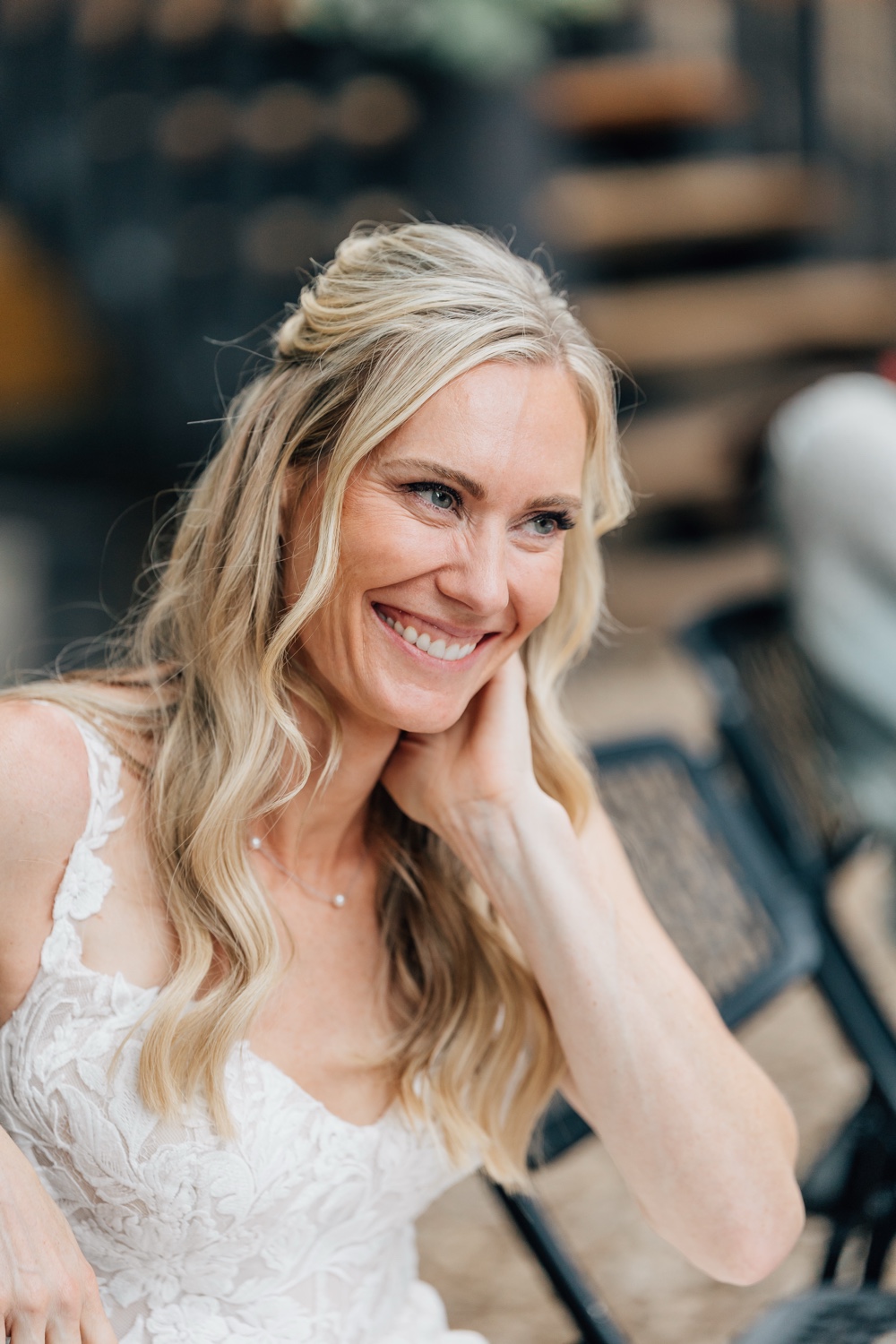
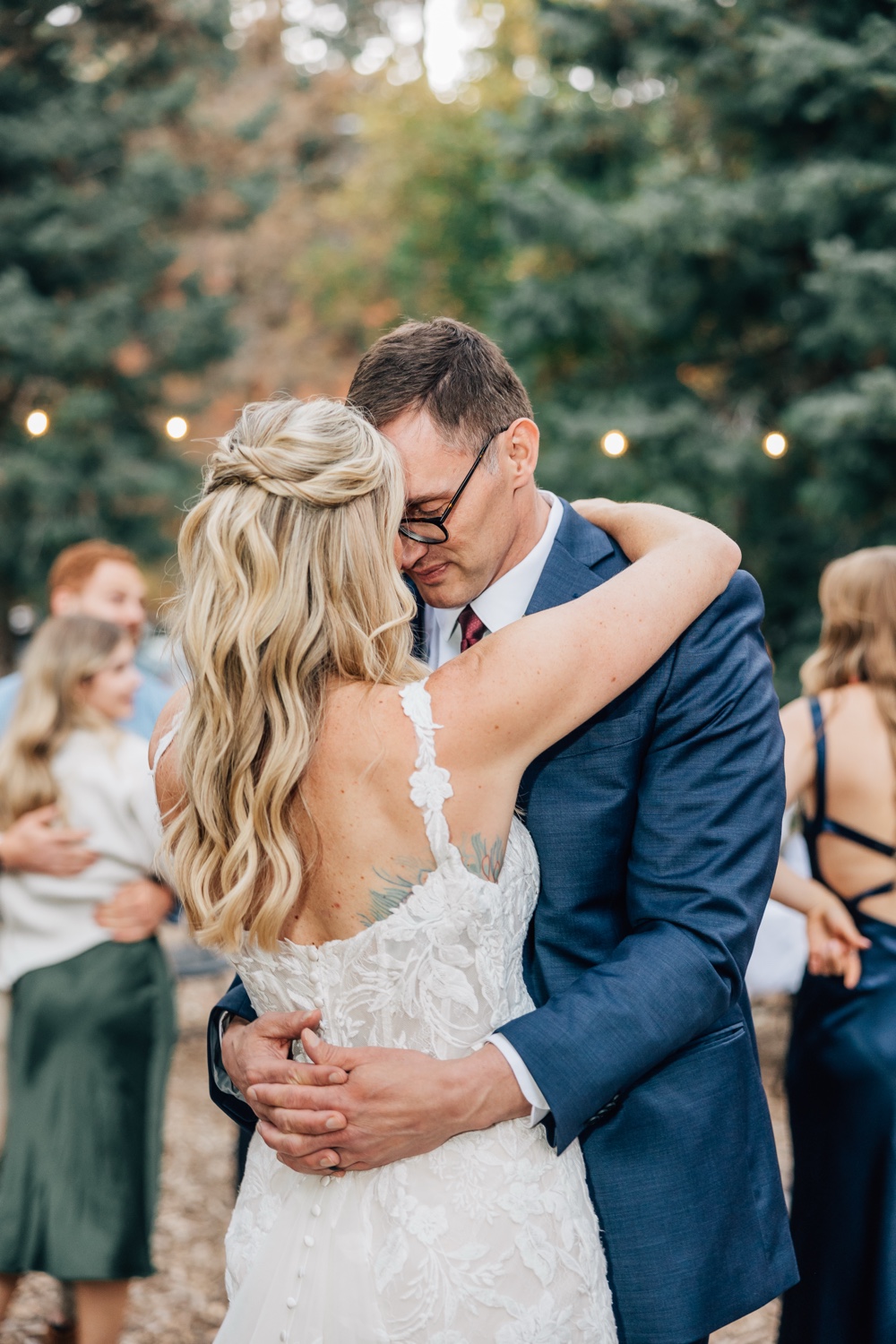
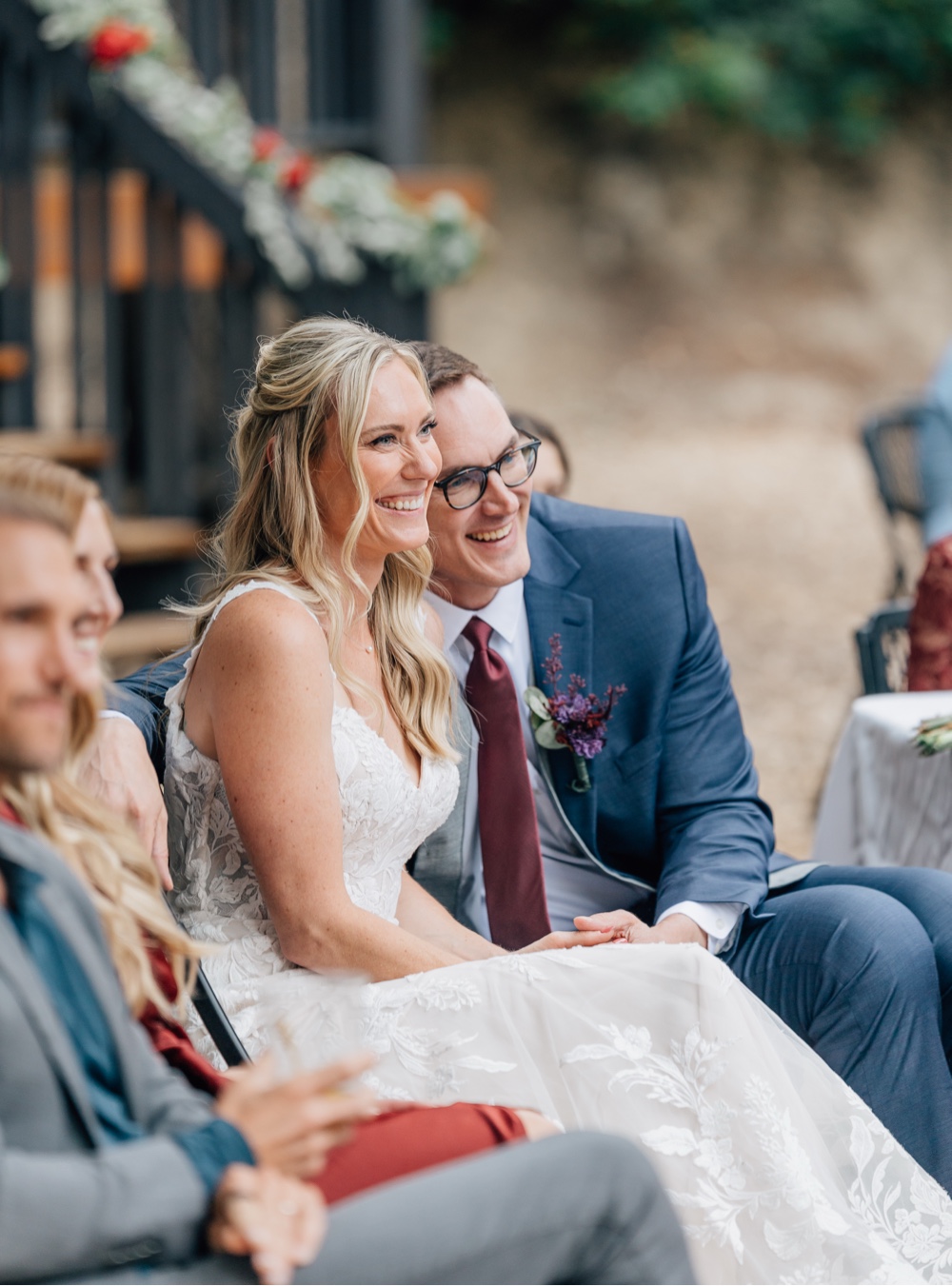
[Adapted from my wedding vows to Danielle LeCourt, September 2025]


In what feels now like a former life, nearly all my thoughts were prayers. I talked with god constantly. And for a very, very long stretch, so many of those conversations were rather desperate. 


What I wanted more than anything — what I had tried to build my life around and toward — was a loving and affectionate romantic relationship and a happy home.


But for all my efforts, the thing that I wanted most felt *so* far away. And the cruel irony was the harder I tried, the farther out of reach it all felt. 


I didn’t understand.  


Early mornings were often the most difficult, when I felt so vulnerable and earnest. I remember on one of those early mornings, working out on an elliptical at the YMCA in Mission Valley. As I thought about my difficulties— how long they had persisted, how heavy, and how stuck and impossibly far away things felt — my anxiousness reached a sort of fever pitch. At some point, piercing through that spiraling internal chaos, I felt a question, which stopped all my thoughts. It was a question I then attributed to god: 


Do you trust me?


My answer was immediate and instinctive: “Yes.” 


Silence seemed to follow that brief colloquy. I would feel that question surface again, though, every so often in the years that followed, notably as my situation only ever seemed to get worse. Whenever I felt the question, I always gave the same answer — though sometimes it took a little longer to find that answer within me. 


It has now been about 13 years since that early morning. In many ways, that version of me from back then would hardly recognize the man who stands before you now. I like to think, though, that he’d recognize in me the same earnestness. I know he’d see that this great desire of my heart has not changed. 


What that younger version of me could not see then — what he could not have even contemplated during those difficult early mornings — was that one day, a little more than a decade later, I would be newly single and just (reluctantly) paid $60 for premium access to Hinge. I was trying to be brave and follow my therapist’s advice to maybe just get some practice talking to women again. But as it turns out, the first person I would match with would be this witty, gorgeously tall former volleyball player (a more accomplished athlete than I could ever hope to be). Oh, but she would also lead with her interest in black holes, and she would write the most beautiful poetry and prose — to say nothing of hosting her own podcast. I’d find soon enough that she asked the best questions, too, and listened for the answers intently. Turns out she would be one of the best interviewers I’ve ever seen, and probably the most well read person I’ve ever known. She would certainly be the most intellectually curious, while also an incredible mother to two beautiful girls. 


And she would match with me by commenting first on my interest in poetry, of all things (“You had me at poetry that makes me feel something.”).


Somehow, all this would only begin to describe the depth, passion, and complexity of this beautiful woman who, before our first night of chatting was over, would call me “handsome.”


At some point less than two months later, this amazing woman would read on my face that I loved her and prompt my full confession. A little while later, she would tell me that she loved me, too. And in the months that followed, I would come to find in her love the kind of settled rest my soul had always longed for — the kind I suspect every soul may long for.


And now? Now, I live in a world where I get to love you and be loved by you. Sometimes my heart can hardly contain that happiness. It is so much more than I could ever have imagined—more than I had ever hoped for.


So as I look back now to all those years of difficulty, and I remember that guy on the elliptical, I can’t help thinking that everything that came before was a necessary predicate to the happiness I feel now. And what’s more: there’s a version of this story, Danielle, in which you are the answer to that brief colloquy all those years ago.


That thought has also stopped me in my tracks more than once. 


Now, What do I make of all this? 


Honestly, I don’t know. It's no secret that I tend to be a bit skeptical these days, and I want to be careful about reading into things more than might actually be there. 


But, to borrow from Mary Oliver, my love, I can at least say this: finding and loving you — more than anything else I’ve known and experienced these last many years — has me “consider[ing] eternity as another possibility.“


Sunday, May 14, 2023

Commencement

A friend recently shared with me the old Yiddish adage, “Man plans, and God laughs.” Even for a guy who isn’t sure about god anymore, that hits hard. 

And then I recently turned 45. Only a year ago, maybe two, I turned 40. At least that's what it feels like.

Those two thoughts merge here because my 40th birthday felt like a big deal – a mile marker that left me keenly aware of my mortality in ways I hadn’t been before. In the days surrounding that birthday, I took careful stock of my first 40 years of life, looking for angles and hoping I could build on all I had learned (mostly from my myriad mistakes) to maximize the years that remained.

At the time, what lay ahead felt mostly plotted out. I really only foresaw play at the margins, and I envisioned years ahead of incremental improvements, with the unstated hope that somewhere in those improvements, I’d find happiness. I was still heavily entrenched in Mormonism then (with no thoughts of ever leaving). I had a job I loved and planned to never leave. And while I’d had a long dysfunctional marriage, we were working on it – at least in theory. The promise of healing always seemed somewhere just out of sight, somewhere beyond the horizon. And maybe that hope, combined with the terrifying impossibility of divorce, was enough to stave off any thoughts of ending things. 

That’s my best guess, at least.

But even if I put aside the pandemic, it hardly feels like hyperbole to note that my life has been almost completely upended in the last five years. In fact, it’s slightly amusing to think just how bent out of shape 40-year-old Aaron might be if he could see what was ahead. I can imagine his utter confusion, morphing into abject horror. And then a lingering, sinking feeling in his stomach that would give way to knots that keep him awake at night.

As I look back now, I feel for him. But then I can also smile a little, because I know it’s going to be ok for him. He will go through so many levels of Hell in the next five years (and he really has no idea), but he’s going to be ok.

In fact, he’s going to be so much more than ok.

45-year-old Aaron

The Upheaval

If you’re reading this, you’re almost surely aware that four years ago, I began what would become a fairly public transition away from Mormonism. At the time, I could hardly imagine anything more difficult: leaving a high-demand religion that I heavily invested in for four decades – a religion that provided a worldview I built my entire life around – was absolutely terrifying. It shook the very foundations of my reality.

As I tried to pick up the pieces in the aftermath, I channeled that pain and disorientation into a series of public blog posts over the course of roughly 15 months. I’m not sure Ive ever poured my heart and energy into anything more than I did that project. Im so pleased with how it turned out.

And then more recently, after 16 years, I left the Department of Justice and my position as an Assistant United States Attorney for the District of Utah. I loved that job so much, and I was all but certain I’d never leave it — until my circumstances all but demanded it.

Those “circumstances” involved an impending divorce, after nearly 23 years of marriage.

**** 

A few years ago, I wrote candidly about my marriage in the context of my faith transition. In that post, I tried to be so careful in walking the tightrope of explaining our years of difficulty without oversharing and without glossing over the reality of just how difficult things had been.

At the time I wrote it, I felt like we’d moved through our difficulties toward a healthy, functional relationship.

Now. . .well, time has now proven those feelings were mostly aspirational.

The hardly veiled subtext in that difficult post was that, for as long as I can remember, ours had been an affectionless marriage. From my perspective, Michelle’s romantic inclinations for me died not long after we married, though Michelle puts the date years later. Either way, we both seem to agree (now) that had been our reality for at least the last 14-15 years.  

We can venture guesses as to why, though even educated guesses don’t feel helpful here and now. We did, however, spend years and years in counseling trying to bridge that divide — often with (LDS oriented) counselors assuring us with some version of if we did all Mormon things, God would heal our marriage.

Not exactly, it turns out.

I wrote that post in earnest in late 2019, and the tribute I paid to Michelle then still mostly holds, almost to the letter. But as time marched on, the dysfunction between us became painfully obvious, the gnawing loneliness I felt harder and harder to ignore or explain away.

By late September 2022, despite what felt like our best efforts, the decades of distance had calcified into a hopeless impasse. Or maybe they had long since calcified, but it was only at that point we could no longer pretend otherwise.

We (I) needed to end our marriage.

And to do that, I soon had the sinking realization that I had to leave my job.

The heavy months that followed were a mournful mixture of plotting and planning, including the slow reveal to trusted friends and family – some of whose help I needed.

We told the kids a few weeks before Christmas. We told the world after I’d filed in late January.

Too many already know that divorce is hell, even when mostly amicable. In fact, that descriptor hardly feels sufficient, so let me amend that statement a bit with my now expanded vocabulary: for me, divorce was fucking hell.

At least for my part, the process of separating brought me to the lowest moments of my life.

In fact, one practically sleepless night in early February, I spent what felt like hours in the early morning heaving in uncontrollable sobs on my couch. I had never felt so completely alone. I had never felt *that* hopeless. In the darkness, I worried whether I would ever be functional again. I worried that I wouldn’t be able to hold onto my new job. I worried that I’d never again be able to sleep through the night.

And while I was not suicidal, I was in such pain that I wondered if death wasn’t the only way to stop feeling such all-consuming anguish.

In those terribly vulnerable moments, I almost begged for the chance to reverse course on our divorce. Except by then it was too late.

Beyond that harsh reality, there was also the painfully stark reminder of my surroundings: our living room was lined with years of family photos, all staring sadly at me. You see, I could detail the empty longings I felt in Every. Single. One. of those photos. In fact, the truth is that I’ve hardly ever been able to look at any of our family photos without sensing a kind of cruelty in the feigned closeness of our smiles, in the depictions of physical proximity that belied the isolating distance between us.

In those dark hours, I felt so completely broken. And further, I felt so foolish that I had ever dared to feel otherwise.

****

Fortunately, at that lowest point, I had mind enough to send a desperate text to a few people close to me. My brother Matt, out of town, read it and got ahold of my mom, who I had not been close to for years. She called immediately, and I reluctantly answered. And when I couldn’t stop sobbing on the phone, she told me to come over right then (or she was coming to my house).

I drove the few miles to her home, still crying uncontrollable tears the entire time. Another friend, Christopher Beesley, called me on the way, catching more than his fair share of my anguish. Mom met me in her driveway, hugged me tightly, and ushered me inside. I sank into her couch as she held my hand, and I told her everything that was in my heart.

There, at what felt like my lowest point, I started to rebuild my life.

Commencement 

I’ve titled this post “Commencement” because it feels (at least now) like a story of beginnings. Beautiful beginnings. But the thing is, as I’ve tried to write about this experience of starting over, I cannot meaningfully parse that beauty from the painful endings that preceded them.

Nor, frankly, do I even want to.

To borrow Mary Oliver’s challenging metaphor, it’s my sense now that these various “box[es] full of darkness” were also gifts. Sure, the loss of my faith, my marriage, and my career were “gifts” I didn’t want (and I certainly never asked for), but I cannot bring myself to wish them away now.

[And please, please understand, I can say this now only in hindsight. To have offered such hopeful forecasting to the guy in the middle of those “gifts” would have been a kind of cruelty.]

In fact, I want now to remember and hold onto every one of those feelings of heartache, loneliness, and brokenness. I need to, because otherwise, I lose the preciousness of what followed.

For instance, beyond those healing moments with Mom, there was the confiding in my friend Trinity in early October as we sat in the R&R BBQ parking lot, and I could not hold back tears. Trinity listened so quietly and gently to my bombshell, and our friendship grew exponentially in those moments. And in the days and months that followed, he moved heaven and earth to help me secure new employment. I could hardly ask for a more genuine and loyal friend, in a more critical time of life. Or for a more complete demonstration of kindness – kindness that I can never repay.

Then there was the sense of raw, anguished desperation that drove me to Mat and Brooke Shaw’s couch in late January, where I cried helplessly while curled in the fetal position. Mat and Brooke had sat alongside me so faithfully through the loss of my faith, and they listened still so gently to a somehow more painful development. So softly, they offered what comfort they could, with Brooke putting her hand on my shoulder at one point and whispering that it would be ok.

In that hour, Mat and Brooke met me (again) in my brokenness, and it is now one of the most cherished memories of my life.

I also need to remember the emptiness I felt as I packed up my belongings to move out of my home, and just how many friends and family met me in that emptiness. On a Friday morning in mid-February, they loaded and then unloaded my things with smiles, assembling new furniture and arranging items without asking – all while somehow making me feel as though I were doing them some service.

I could hardly tell them then (or now) how much that meant to me.

And then to have one friend, Jeremy Snow, unexpectedly at my door the next morning — the morning after my first night in my new home. Jeremy spent several hours visiting with me (and happily assembling more of my office furniture). And while I can’t remember the specifics of our conversation now, I remember how precious it felt. I remember, too, that he just wanted to make sure I knew I was loved and not alone.

I still can hardly look back on his visit without tearing up all over again.

Or my brother Matt’s perfect silence a few weeks later as we drove the lonely miles down to Valley of Fire, Nevada. He almost pretended not to notice my uncontrollable tears from a few feet away as we took in the barren landscape, and I felt the fresh sting of all I had lost. And then, after a long, long silence (and my tears had started to dry), he offered the gentlest words of encouragement — words that belied any hope that I’d been able to cry those tears in secret.

There are the cycling miles we put in that day, too, as I lagged behind most of the group, so heavy in my grief. Slowly, so slowly sometimes, I tried to pedal through that grief as I took in the breathtaking painted rocks. It seemed like l felt everything in those miles, including, eventually, something close to healing.

All the above doesn’t even take into account the texts and emails and phone calls and Facebook messages from more friends and loved ones than I can count, all of whom received the news of my divorce (and my loss of faith years prior) with such care and who took up the invitation to literally and figuratively sit with me in my grief.

There have been so many treasured visits to my new home, too, from friends and family anxious to mourn and laugh with me, to share in my food and deep conversation.

I wonder if there is anything more precious in this life than the pairing of good food and good conversation with your favorite people. I’m not sure there is. 

So while there has been (and may yet be) space for lamenting the difficulties of the last 5 years, I’m not in a place now where I can lament them. Removing those parts of my story would take from me too many moments of beauty and connection — too many moments that are unquestionably some of the most precious of my life.

As I have said so often before, I would not trade those memories (those difficulties) now for all the world.

****

But there is more here than just a reframing of hard things. There is this: I don’t seem to be nearly as broken as I felt in my lowest moments. 

I started to notice this even before I (re)started therapy. Somewhere in feeling my way through the darkness of self-doubt, a persistent bit of sunshine kept bubbling up to the surface:

I really, really like who I am.

Yes, there are parts of me that are hopelessly awkward, and parts of me that will (probably) always fall short of the ideal. But for as much as I fall short, I so love who I am becoming. I love the direction I’m heading. 

I love, for instance, the daily habits I’ve cultivated and refined over the years. Those habits stem so much less often now from a place of emptiness and insecurity (of trying desperately to be “enough”), and so much more from simply trying to live intentionally.

I love where those habits have led me. I love how they expand for me what is possible – in a day, in a year, in a life.

As is probably evident to everyone by now, I have also come to love good poetry, and I cherish how it calls to me and lifts me. In the framework of my past life, poetry has become a new form of scripture and reverie. Maybe even sometimes prayer, though I don’t use that word in the way that I used to. 

I also love this growing sense of curiosity and willingness to be vulnerable. I love the challenge of squaring up to the world each day with a determined openness.

I love the friendships I’ve made and strengthened, especially these last few years. And I love the growing feeling that rich connections and relationships are just around the corner. . .with just a little bit of bravery and kindness.

And speaking of bravery, can I share with you something that’s brought me so much joy in recent months?

About a year ago, I took up the personal challenge to try to do something “brave” every day. I’ve never defined the term, but it seems to mean finding the courage to do something uncomfortable — something that I am at least a little afraid of. Sometimes that’s meant big things (like tackling Big Cottonwood Canyon on my bike), but usually it’s meant little things. Often that challenge has been just the nudge I need to gather the courage to talk to people in situations where I’ve usually stayed sheepishly silent.

I’m not sure I can overstate how much that small shift in perspective has changed my life.

And yes, a lot of that has to do with the fact that I’ve started talking to people more. People I don’t know, in all sorts of situations, just trying to make micro connections. At the gym. In the grocery line. Sometimes even (gasp) on the elevator.

For instance, several weeks ago, I engaged my Uber driver in pleasant banter. Somehow, by the end of our 15-minute drive, the conversation had led us to talk earnestly with each other about divorce and moving through it. 

As these sorts of interactions have piled up, a curious thing has happened along the way. Somewhere in all these efforts, I’ve started to sense just how much people (on the whole) appreciate when others take a kind interest in them. I have always, always been so shy, and the thought that kept me from interacting with people I didn’t know, for all these years, was always some form of “Why would this person have any interest in talking with me? I'm not going to bother them.”

But as I’ve gotten brave enough to shift the focus away from myself and toward others — trying to notice something, anything about them that might lead to a kind observation — I’ve gotten to the point where I almost can’t help but talk to people now.

And here’s the thought that stopped me in my tracks recently (in the best of ways): this was how Dad always approached the world, how he approached others. I’ve even written before that one of Dad’s beloved hallmarks was that he “took an outsized interest in people” — the kind of interest that allowed him to talk to a janitor once who would remember that micro-connection years later.

I almost started crying at the thought that I’d somehow, impossibly, found a way to channel this most precious part of my dad, to keep him alive (in me) just a little more, for at least a little longer.

The world feels so much brighter in this space. So much more open and welcoming.

****

As for my career change, it’s true that I left a job I loved, a job I never planned to leave. That was very difficult.

Recently, though, I’ve explored Annie Duke’s research on the science of quitting. She posits that we humans don’t quit things enough (or soon enough) — that, like aging athletes who hang on long past their prime, we default to a status quo bias that often leaves us holding on to jobs, relationships, and circumstances long after it might better serve us to move on.

Because this tends to be our default, a forced change sometimes (often?) ends up being the best thing for us.   

I have a suspicion now that might be the case for my career.

Listen, I loved being a federal prosecutor. I loved the work I got to do. I loved the people I got to work with. I loved the lifestyle.

I had also grown very comfortable in that role.

And maybe there’s the crack of light. In my new role — partner at a law firm with a practice focusing on white collar criminal defense — I am uncomfortable all the time. Work on this side of the aisle, in the private sector, requires a much different (and expanded) skill set, and almost everything about the job has been so stretching and demanding.

But then, I hear that discomfort is really the only path to growth. Real, exponential growth anyway. And on my best days, I see that discomfort as yet another daily opportunity for bravery. At the same time, too, it helps that the people I get to practice with now have also quickly become some of my favorite people. They have been so patient and reassuring as I find my footing.

I will find my footing. And as I do, I have this growing feeling I’m really going to love this side of the work, too. 

****

As for the deeper, existential matters that I wrestled with (at length) in earlier posts, let me share where life has taken me these last few years: 

I have no more answers on those matters now than I had a few years ago. In fact, I may well have fewer.

But then also, having answers matters so much less to me now. I mean, of course I care about what’s to come, but that feels unknowable. And the fact is, I’ve already prepared myself for the worst.

Besides, I feel so much more settled now in searching curiously against a backdrop of a growing list of questions. Whether I find “answers” to those questions feels so much less important now than the people I get to search for them with, than the connections I want to make and strengthen with my fellow travelers as we walk each other home – whatever “home” ends up looking like.

Really, all I can be certain of is what I have in front of me right now. And, especially sensing this may be all I get, I want to make the most of this “one wild and precious life.”

I’m learning, too, that might mean spending some afternoons “just” feeding sugar cubes to grasshoppers.

I still prize kindness and integrity, but I’ve also added to that list now the companion virtues of curiosity and bravery. If it wasn’t already evident above, people and connections are what matter most to me now. And when I contemplate what a “good” life might look like for me in the end, I’m not sure I hope for much more than to feel present, grateful, and content as often as possible. 

For me, those are the seeds of wonder and awe, and I hope to drink in those feelings as often as I can.

****

Ah, but the truth is, there is more. I do, after all, hope to know love and companionship in ways I can’t remember knowing — in ways I’ve maybe never known. In that regard, the Raymond Carver poem “Late Fragment” has stirred something deep within me for years and called me to account:

It is not just romantic love I’m after, though.

An author I love recently pointed me to Maurice Sendak’s final public interview. Sendak wrote the beloved children’s book Where The Wild Things Are, a story I must have read to my children at least a hundred times in an earlier life (I can still quote most of that book from memory).

Prior to the interview, Sendak had lost someone very dear to him, and he knew he wasn’t long for this world either.

And yet he movingly expressed that he was “in love with the world.” An apparent atheist, he had no fear of his own death, but he confessed how hard it was to lose people he loved – how much losing them made him love them more:

“I have nothing but praise now, really, for my life. I mean, I'm not unhappy. I cry a lot because I miss people. I cry a lot because they die, and I can't stop them. They leave me, and I love them more....”

Moments later, Sendak poignantly acknowledged that “there are so many beautiful things in the world” and that he was ready to go. He described himself as “a happy old man” but that he would still “cry my way, all the way to the grave.”

His final words to the interviewer were to “Live your life. Live your life. Live your life.”

So maybe this is my hope and my determination as I set out on this second half of life: that I, too, fall in love with the world and daily find ways to "Live [my] life. Live [my] life. Live [my] life."

I hope hope hope to stay open enough, to live bravely enough, to feel everything, “beauty and terror” as Rilke put it. I want to know the exultant joy of loving others with my whole soul, and I’m willing to know the exquisite companion pain of probably losing them.

And maybe, when the end comes for me (hopefully not for a while yet), Mary Oliver’s words will have become mine:

I was a bride married to amazement.

I was the bridegroom, taking the world into my arms.


When it’s over, I don’t want to wonder

If I have made of my life something particular, and real.

I don’t want to find myself sighing and frightened,

Or full of argument.


I don’t want to end up simply having visited this world.


I don’t know about you, but I’m determined not to end up “simply having visited this world.” Or to borrow from Thoreau, I’m damn well determined not to go the grave “with the song still in [me].” Not, at least, if I get to spend any bit of this great adventure walking alongside my friends and loved ones.

And if you’ve come with me this far, you must be one of those friends, right?

If not now, then soon enough, I should think. 

Either way, I'm *so* glad to have you here with me.